.png)
The Defender Domino: How a DigiCert Breach Turned Microsoft into an Unwitting Proxy for APT-Q-27
- Security Joes

- May 6
- 9 min read

On May 1, 2026 - Security Joes investigated an unusual wave of Microsoft Defender alerts affecting multiple customer environments at the same time. At first glance, the volume and consistency of the detections suggested a widespread security event. Across different organizations, the same alert patterns appeared, creating the impression of a coordinated malware outbreak or an anomaly on the detection side.
The detections were ultimately classified as false positives by Microsoft. Many organizations closed the case, suppressed the noise, and moved on.
For us, the classification only answered one question: whether the alerts represented active compromises inside those environments. It did not fully explain why trusted certificate-related artifacts were flagged in the first place.
That gap became the starting point of the investigation.
In following the alert storm, we discovered a public security incident involving DigiCert, in which attackers had abused access to obtain valid code-signing certificates. In these cases, the certificates were not just administrative artifacts or theoretical risks. By signing malicious files, malware was able to appear legitimate to one of the most sensitive trust mechanisms.
This raises a larger question: what happens when the trust layer defenders rely on becomes part of the attacker's delivery chain?
What follows is an investigation into abused certificates, their associated publicly known files, and how this activity connects to a China-Nexus threat group. Rather than focusing solely on the alert storm that exposed the issue, this analysis follows the manipulated chain of trust, from certificate issuance to signed malware, to the infrastructure and tooling behind the campaign.
An Overview of the Article: Key Takeaways
On May 3, 2026, the cybersecurity community was flooded with Microsoft Defender ATP alerts tied to a single detection: Trojan:Win32/Cerdigent.A!dha
Microsoft later confirmed these alerts were false positives, tracing back to the DigiCert incident.
The DigiCert compromise led to the creation of 60 valid certificates, which were subsequently used to sign malware.
By investigating publicly available files, we uncovered a direct connection to a China-Nexus APT group.
In addition, practical guidance for hunting and detecting this specific threat is provided below.
False-Positives and the common denominator
Whether you're an analyst or a CISO, if you were working on Sunday you likely witnessed a surge of alerts tied to a single detection.

The volume alone was enough to raise concerns, but what amplified it was the severity implied by the alert itself, compounded by reports across the community of others being hit with the same issue.

Later that day, a public post from Bleeping Computer revealed that Microsoft had acknowledged the error, along with a subtle reference to the root cause: a cybersecurity incident affecting DigiCert.

This prompted us to investigate further and understand the full scope of what had occurred.
The Cost of a Single Gap: What could go wrong?
It began with a familiar support scenario: a customer-facing employee received what appeared to be a routine file through a support channel. According to DigiCert's incident report, the threat actor contacted the support team via chat and delivered a ZIP file disguised as a customer screenshot; inside was a malicious .scr executable. Several delivery attempts were blocked, but one ultimately compromised a support analyst's endpoint. DigiCert later stated that the affected machine had CrowdStrike Falcon installed, but the agent was not functioning properly at the time. This highlights the kind of operational gap that turns "covered by EDR" into a dangerous assumption.

From that endpoint, the attacker gained access to DigiCert's internal support portal, setting the stage for a far larger trust abuse problem.
From the compromised machine, the attacker was able to interact with internal support functionality that exposed initialization codes for already approved EV code-signing certificate orders. This access did not require a direct compromise of DigiCert's signing infrastructure. Instead, it exploited a trust-adjacent workflow: support access intersecting with certificate issuance.
The result was a set of valid code-signing certificates that could be used to make malicious files appear legitimate. Once malware is signed with a trusted certificate, the attacker is no longer simply delivering a payload; they are borrowing trust from the software ecosystem itself.
Revoked Certificates
The table below captures the revoked certificates from the incident, including the certificate SHA-256 fingerprint, subject metadata, issuer, validity window, and revocation details.
Certificate SHA-256 fingerprint | Subject | Country | Issuer | Valid from | Revoked |
6f78526ebbc6c7b6c51c27db13755f4667396187c307d835ea236a8d236b2157 | CPSS (Na Ji Hun) | KR | DigiCert Trusted G4 Code Signing RSA4096 SHA384 2021 CA1 | 2026-04-13 | 2026-04-13 |
1b15339819aac959e22096d57b1af2c3afd6c2648a6ae8bb766d8f4ba56eca72 | Com2uS Corporation | KR | DigiCert Trusted G4 Code Signing RSA4096 SHA384 2021 CA1 | 2026-04-13 | 2026-04-13 |
58c47d15b4191d4aa083d655f021fc319eaa83872225de5616f45bf97cfa31e2 | Com2uS Corporation | KR | DigiCert Trusted G4 Code Signing RSA4096 SHA384 2021 CA1 | 2026-04-14 | 2026-04-14 |
26c193f392598842d20ffd0c4ff35b33d2766d58cec7094d16a54436e5701911 | Korea Digital Forensic Center Co., Ltd. | KR | DigiCert Trusted G4 Code Signing RSA4096 SHA384 2021 CA1 | 2026-04-10 | 2026-04-10 |
The full list of revoked certificates from this incident includes multiple organizations across several countries, all tied back to the same DigiCert certificate trust.
Seen In-The-Wild
Using this information, Security Joes hunted public sources for samples sharing these certificate fingerprints
SHA-256 | Detections | Size |
f76c31ecdafb59279833f17f350d9c2b1317da269823097e8dd1736c72449c88 | 36 | 42.46 KB |
00ed464e867fdc31ac4eb4e18757fe4b79b2f79ff63cc469cfcfeb205df20af0 | 45 | 617.86 KB |
02f95352c8d55f41f53339283ffed6f1cf548b2c5040aa9d1e37bafcd9fa55b4 | 43 | 625.76 KB |
99b7658dc52cedff3403e0df0b392828baa3344571593115b2349579c2b840ca | 46 | 806.27 KB |
bb24c5116eb8fe9bc2a2cddbbe4db6eeff414753f0eeb1e80e3d610b135b9840 | 2 | 262.77 KB |
34110c6a0a8c6e88ddd9647d2427a5448a23806aca460304a36df6dce65f7771 | 42 | 961.78 KB |
8509af4802dd79fc503c425c9dda035d9b636f22ffac81a8f04e6a9d080fdcc3 | 35 | 299.69 KB |
056bfca8608ea860e17fad10d04ebbb6c351ae5d82a46e3a7a7c5c33e33129ed | 39 | 42.46 KB |
ba4de3c93d319523ab95cf3b724e6cef636e3890746c60067fd70b6f7792e428 | 38 | 666.46 KB |
6ff62e2099092a781caacc486c4088dd89690088408a6cf6198d145b80944c41 | 33 | 669.46 KB |
4c7c01f5933b9714e037fafac97a4cefac605a54645045f911a769c940b404f7 | 39 | 512.46 KB |
12491915ec929b14808911bcde5a4459863b16aa417c6a8b09115dcf97066c01 | 26 | 303.78 KB |
c918dded298b0d76d4ac51f23b391f62a95f58b3fa2488202ecbbc9c7ce8e785 | 35 | 626.46 KB |
c08a59750b5a72761d457e7b9875aa251f71c64d0c6bf7e391bb5c5f35cefc3c | 37 | 666.06 KB |
be629aef6df812939b0bc1b4de07f455467359f39c2faa013c092237f7310bca | 43 | 666.28 KB |
53ef62aeb5380761b6b2bc3f881081a2b1f46b96f899b585c62ee26338b15c4a | 41 | 665.78 KB |
9ae8388b6bc4043a49573a617927cabbd61c254014e0ceb4223cf50431841b2c | 39 | 673.78 KB |
dc05f848515c046a75947917e13377b6ed21ea537e8346704933029f56b3f90f | 41 | 960.36 KB |
7cb929fee994dc32a1718176d7dc3888bcba47d508117c13db143a5bd306fe30 | 38 | 1.08 MB |
17993ab101f5656319dc04ca0aec9ead25ef1a371e68c31ecbe65b8b2ab80dc9 | 38 | 621.78 KB |
ef23637b2b2cd34b3370bbebd10505857360a0ccfa4d4abf810fb764d6004140 | 33 | 36.78 KB |
85113d10061110c755626eec419703a57e82afebaf95064c83cf5d4c5c55193a | 45 | 672.28 KB |
8492444e70af40fc58fdb4b1a1f30fbbb944c186224353d35e34036da6d11f08 | 44 | 671.28 KB |
56541af54c5b4ad7de32560f780f0e606e5bf67170ad3bc241c9e2d75ea3f760 | 40 | 671.78 KB |
c85911c6b8fa64bb84fe9a46c6f61e45c5aa8e47c73dfa839445a5037b1b43f9 | 39 | 671.86 KB |
d7121915d643fb80745bbfa0ab9425edcc9bc451e7117ec9a7be3b101af50d0a | 48 | 672.78 KB |
56b6571ded7d34c7d3adccc46a116f2960d7a2d77a7a4caa70abd23c99602eb7 | 1 | 44.93 MB |
e6dc0e3229a1fa43bee721ab2165f36c18b9b5668b11f04de33d66490d240bf8 | 40 | 9.95 MB |
39781b4480850b78d8e644e53c581081d40c2a2761cafe3c670e0b06fcd16a7a | 37 | 942.77 KB |
36d22778dda953d192e7fd910faab2f4012421efbb35360ec7fe3e1c5109f1aa | 36 | 32.23 KB |
1056ba2ec7a2151e1ade4a02279ace0c291fadc329cfd661fa427b4efed53578 | 39 | 962.23 KB |
4ba01f317dd469c6ce5fb5333828ea5faf6761c263431ebcd0a5c17c06b00868 | 40 | 675.73 KB |
5e841260983954da60716b99306a410898bca4d30c14626553205753f60a6d2f | 4 | 264.44 KB |
3602827187429435936454364581471d9f1b84d97a61ff63e346db952fef4094 | 0 | 96 MB |
8bfbbe4cc06517b8ddd593651c9b76a3606fe3ca3737b70c797598a7540198c7 | 0 | 1.33 MB |
07e607362ffb256490035a4779b63b769f7cc32a3e7033b4b0fcf77933bec49f | 25 | 1.41 MB |
262b95f10f78e7e558758530828cda02026037a5dc7fb9673f3a0ef4807f3912 | 25 | 668.75 KB |
7822abb768504c945a529db36343950c2ac90716c8450802c153cecdb02e29e6 | 41 | 962.25 KB |
The malware itself is not novel. Median detection sits at 39, with 24 of 38 samples (63%) falling within the 36–45 detection band. The AV industry has largely caught up to these binaries. The certificate theft was about trust, not novelty. The certificates bought initial execution past SmartScreen and EDR publisher reputation checks; once the file lands and runs, on-disk AV detection holds up fine.
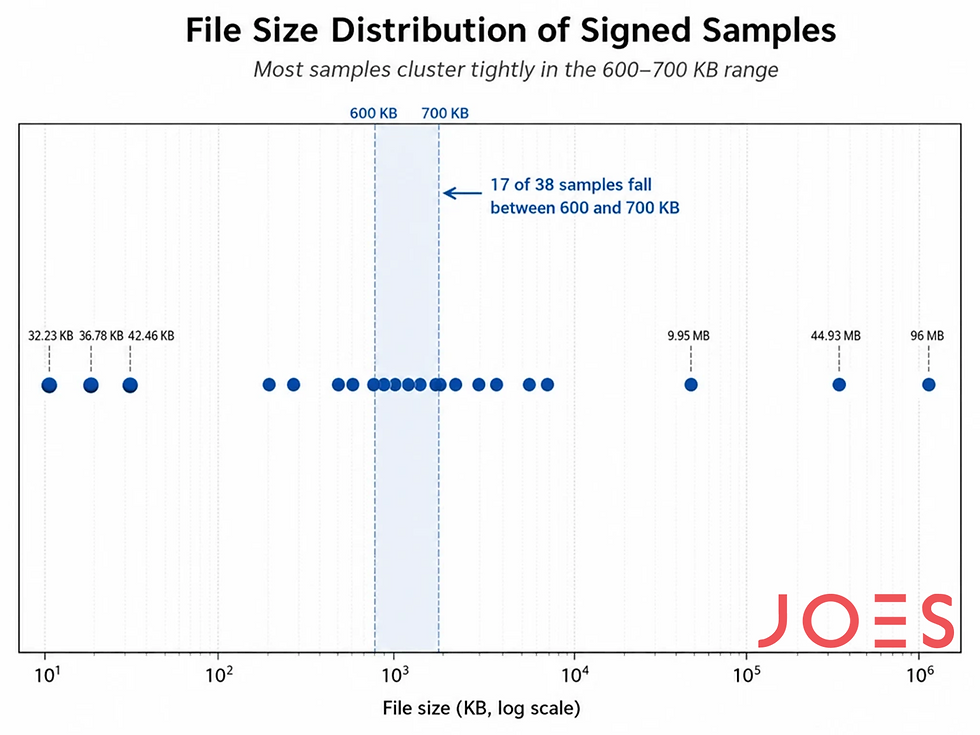
One dominant payload family emerges. Seventeen of 38 samples (45%) cluster between 600–700 KB, with 13 of those packed into an 11 KB band (665–676 KB). That is not coincidence. That is a single compiled artifact, or an extremely stable packer, signed repeatedly using different mis-issued certificates.
At least three distinct artifacts exist within this corpus: a tiny loader, a main payload, and a large installer.
How the dragon bites
java.exe
Our research starts off by looking at the following sample:
Attribute | Value |
File name | java.exe |
SHA256 Hash | 36D22778DDA953D192E7FD910FAAB2F4012421EFBB35360EC7FE3E1C5109F1AA |
Compiler | Microsoft Linker 48.0 / Microsoft.NET |
Compiler Timestamp | Mon Feb 28 06:00:04 2067 (UTC) |
Debug symbols | C:\Users\Administrator\Desktop\084049\java\java\obj\Release\java.pdb |
File size | 34064 bytes |
The behaviour of this small process is straightforward. Upon execution it calls ExecuteAsync() , which in turn invokes ExecuteUpdateProcess()

This fetches a configuration URL and executes all downloaded items
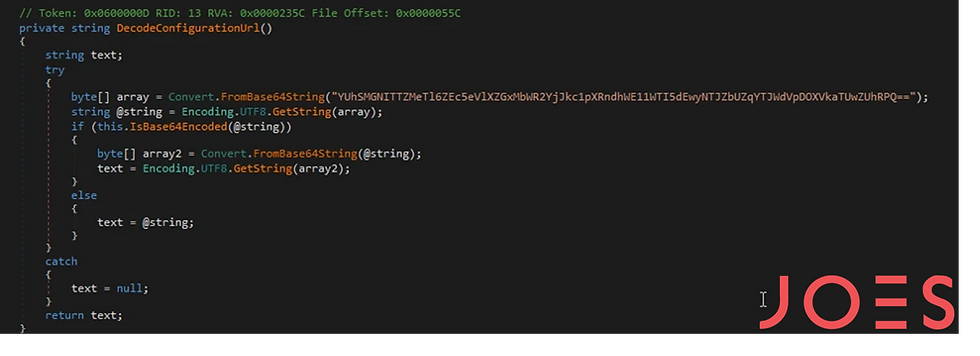

The configuration is base64 double-encoded and decodes to:
hxxps://storage.googleapis[.]com/nvbackend/nv.txtAt the time of analysis, the resource was unavailable, though its contents are known through VirusTotal.

detoured.dll
Following the trail of evidence, Nvbackend.exe is a legitimate Nvidia binary. Reports exist of threat actors abusing Nvidia executables to sideload malicious DLL files. Additionally, the image file can also be obtained revealing it to be a simple decoy.

Attribute | Value |
File name | detoured.dll |
SHA256 Hash | 80B6790557199CE089982634CD6B03DBB9423F2FB0C3F16584B4F066934B9108 |
Compiler | Microsoft Linker 14.44 / Visual Studio |
Compiler Timestamp | Wed Apr 22 16:28:26 2026 (UTC) |
File size | 106736 bytes |
Upon decompiling the executable and reviewing its exported function, the intended purpose of this stage becomes clear.

The main routine prepares memory for shellcode injection using the decoded contents of nvbackend.log . The decoding process can be reversed using the following Python routine:
from pathlib import Path
import sys

if len(sys.argv) != 3:
    print(f"Usage: {sys.argv[0]}  ")
    sys.exit(1)

input_path = Path(sys.argv[1])
output_path = Path(sys.argv[2])

data = input_path.read_bytes()

decoded = bytearray()

for b in data:
    b = (b + 0x52) & 0xFF
    b = (b + 0x25) & 0xFF
    b = b ^ 0x62
    decoded.append(b)

output_path.write_bytes(decoded)

print(f"Decoded {len(data)} bytes to {output_path}")
We can then inspect and analyse the shellcode using tools like scdbg

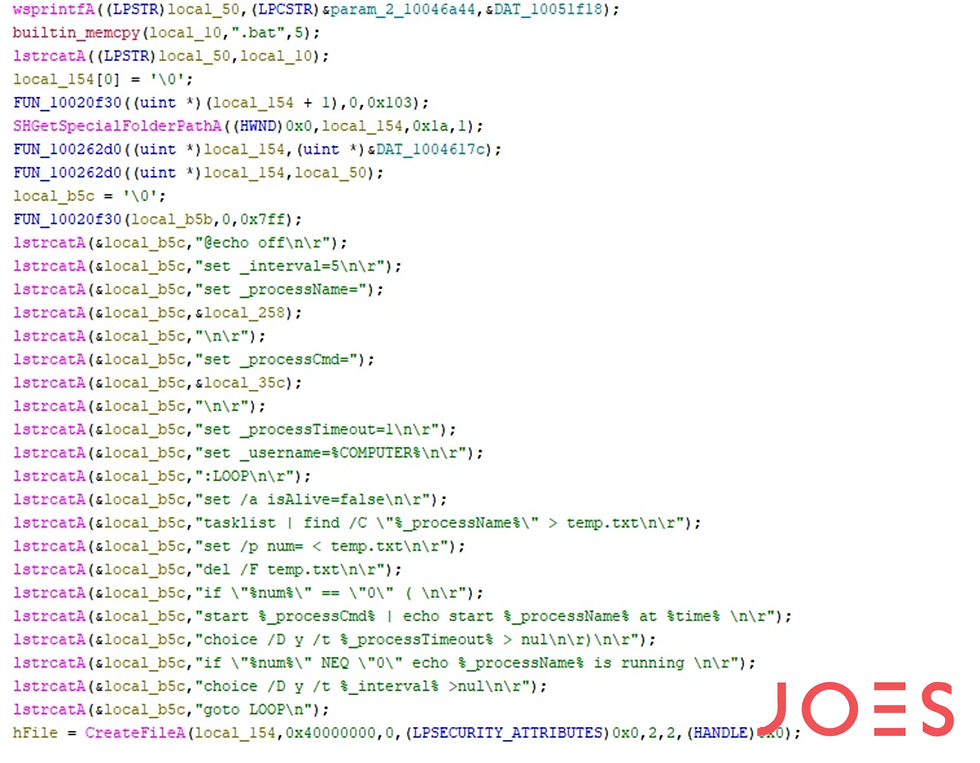
The resulting shellcode is packed with UPX, which can also be unpacked to reach the final payload, one that includes process listing and execution capabilities, enabling escalation to administrator-level execution.


Who Sits Behind the Curtain
After identifying the C2 domain, we searched OpenCTI to assess whether it had any known associations with threat actors or previously reported activity. This pivot produced several relevant hits, providing the first indications of who might be behind the compromise.

In that public reference, there's also a link to other research regarding the activity of the group APT-Q-27, linking directly to the found domain and describing a campaign that also relied on forged or misused certificates, closely matching the certificate-abuse patterns observed in our investigation.
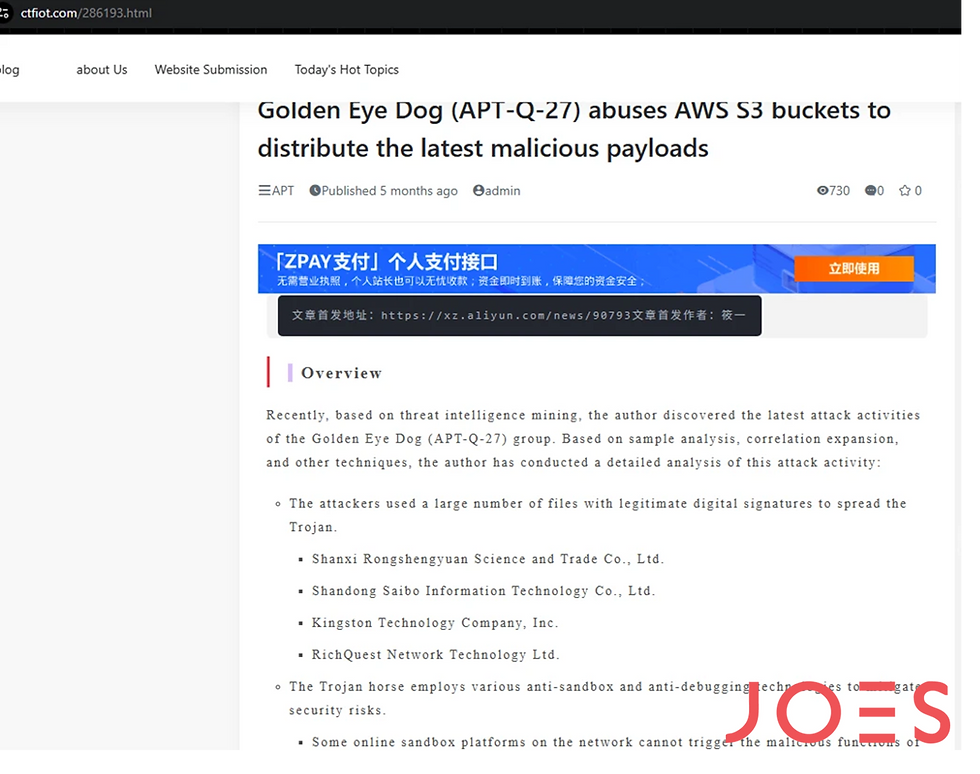
APT-Q-27, also tracked as GoldenEyeDog and Dragon Breath, is a China-Nexus threat cluster associated with financially motivated and espionage-adjacent operations that consistently abuse trust relationships rather than relying on noisy exploitation. Public reporting describes the group as repeatedly using fake software download sites, SEO poisoning, watering-hole distribution, trojanized installers, DLL sideloading, signed loaders, and staged payload delivery to place remote-access or credential-theft tooling on victim systems. Known tooling includes Zhong Stealer, Silver Fox, Winos4.0, and Gh0st RAT-style payload chains, with campaigns engineered to appear legitimate at the point of execution.
Historically, targeting has included Chinese-speaking users and organizations, online gambling and gaming communities, cryptocurrency and fintech entities, customer support personnel, and corporate environments where trust workflows can be manipulated. QiAnXin reporting notes impact across internet companies, securities, manufacturing, IT, gaming, and cryptocurrency sectors, while Sophos describes earlier Dragon Breath activity targeting online gambling participants across the Philippines, Japan, Taiwan, Singapore, Hong Kong, and China. More recent Zhong Stealer reporting reflects a shift toward support-channel social engineering, where attackers pose as customers, deliver archive attachments, and pressure support staff into opening them. This pattern is directly relevant to the DigiCert incident, as it reflects the same operational interest in abusing human-facing trust boundaries.
Conclusions
The Defender alert storm exposed a deeper weakness: certificate trust workflows can be abused without ever breaching core signing infrastructure. The DigiCert support portal access enabled the issuance of legitimate EV code-signing certificates that were subsequently used to sign commodity malware. The campaign leveraged publisher trust to bypass initial reputation checks, though the binaries remained broadly detectable at rest. Evidence and public reporting link the activity and infrastructure to a China-Nexus cluster: APT-Q-27, GoldenEyeDog, and Dragon Breath.
IOCs & TTPS
IOCs
Indicator | Type | Context |
36D22778DDA953D192E7FD910FAAB2F4012421EFBB35360EC7FE3E1C5109F1AA | SHA-256 | Initial “tiny size” loader analyzed in the article, named java.exe. |
80B6790557199CE089982634CD6B03DBB9423F2FB0C3F16584B4F066934B9108 | SHA-256 | detoured.dll, the DLL used in the next stage of the execution chain. |
detoured.dll | Filename | DLL loaded as part of the side-loading chain; its exported function prepares memory and executes the decoded shellcode. |
nvbackend.log | Filename | Encoded payload containing shellcode decoded and executed by detoured.dll. |
hxxps://storage[.]googleapis[.]com/nvbackend/nv.txt | URL | Decoded resource location retrieved by the initial loader. |
C:\Users\Administrator\Desktop\084049\java\java\obj\Release\java.pdb | PDB path | Debug artifact recovered from the initial loader. |
uu[.]goldyeuu[.].io | Domain | Final domain identified in the shellcode |
TTPs
Tactic | Technique | Observed behavior |
Initial Access | Social engineering / support-channel abuse | The broader incident began with a support interaction in which a ZIP file disguised as a customer-provided screenshot led to endpoint compromise. |
Defense Evasion | Code signing with abused valid certificates | Malicious files were signed with valid certificates created through abuse of DigiCert-related workflows, allowing malware to inherit apparent legitimacy. |
Defense Evasion | DLL side-loading / trusted binary abuse | The activity involved a legitimate NVIDIA binary, NvBackend.exe, alongside a malicious DLL and staged payload files, consistent with DLL side-loading tradecraft. |
Defense Evasion | Masquerading | Files such as java.exe, NvBackend.exe, image.jpg, and nvbackend.log used benign-looking names or extensions to blend into expected software/resource patterns. |
Defense Evasion | Encoding / obfuscation | The loader configuration was double Base64-encoded, while nvbackend.log contained an encoded shellcode payload that required decoding before execution. |
Execution | Staged payload execution | The loader retrieved remote resources and executed downloaded components as part of a multi-stage chain. |
Execution | Shellcode execution | The exported function in detoured.dll prepared memory and executed shellcode decoded from nvbackend.log. |
Defense Evasion | Packing | The final executable code was packed with UPX and required unpacking to recover the final payload. |
Discovery | Process enumeration | The final payload exposed functionality associated with process listing. |
Privilege Escalation / Execution | Process execution for elevated context | The final stage contained process execution logic likely intended to support administrator-level execution. |
Command and Control | C2 communication | The malware chain ultimately revealed communication with a C2 domain, which was later used for infrastructure pivoting and attribution context. |
Resource Development / Infrastructure | Cloud-hosted payload staging | The loader referenced resources hosted under a Google Cloud Storage URL, indicating use of cloud infrastructure for payload delivery. |


![LazarOps: APT Tactics Targeting the Developers Supply Chain [PART 1]](https://static.wixstatic.com/media/e17082_c23422c687d54ba084a6d89ddd939173~mv2.jpg/v1/fill/w_980,h_835,al_c,q_85,usm_0.66_1.00_0.01,enc_avif,quality_auto/e17082_c23422c687d54ba084a6d89ddd939173~mv2.jpg)
Comments